Hands in the Dark: The Uncredited Czech Artists Shaping Hollywood's Most Iconic Creatures
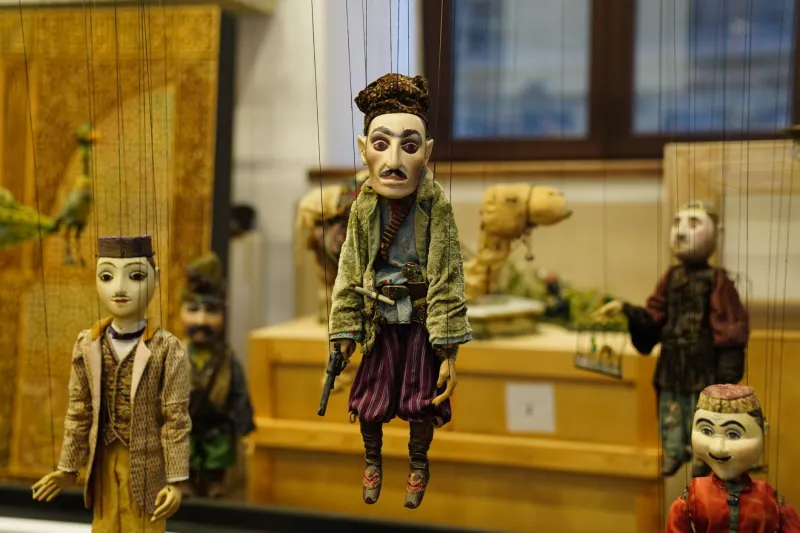
There's a moment in almost every great fantasy film — a close-up on a creature's face, something just slightly wrong about the way it moves, a texture that feels almost biological — where you think, how did they do that? The answer, more often than you'd guess, traces back to a workshop somewhere in Central Europe, staffed by artists whose names you'll never see on a poster.
Czech puppetry and stop-motion animation have been a quiet engine behind some of the most memorable creature work in modern entertainment. And the fact that most American audiences have no idea? That's not an accident.
Prague Was Doing This Before Hollywood Existed
Let's start with some context. Czech puppet theater — or loutkové divadlo — isn't a novelty tradition trotted out for tourists. It's a deeply rooted art form with roots stretching back to the 17th century, when traveling puppeteers brought Baroque drama to Czech villages long before permanent theaters were widespread. By the 19th century, Prague had established puppet theater companies that were doing sophisticated narrative work, building intricate marionettes with articulated faces and expressive mechanics that wouldn't look out of place in a contemporary film workshop.
That tradition didn't just survive — it evolved into something genuinely technical. The Czechoslovak state film industry, particularly through studios like Bratři v triku, produced stop-motion animation through the mid-20th century that was internationally recognized for its craftsmanship. Directors like Jiří Trnka weren't making children's entertainment in the way Americans typically understood that label. They were making complex, sometimes deeply political art using puppets and physical animation as their medium.
That lineage matters, because it produced generations of artists who understood how to make fabricated things feel alive.
The Pipeline Nobody Talks About
So how do Czech craftspeople end up working on American productions? The pipeline is more straightforward than you might think, and it runs in a few different directions.
First, there's the co-production route. Prague has been a go-to filming location for major Hollywood productions for decades — the city's architecture, combined with its relatively lower production costs, made it attractive long before the current era of global streaming. When productions set up shop in the Czech Republic, they inevitably tap local talent. Some of that talent ends up doing far more than location-specific work.
Second, there's the festival and industry circuit. Czech animators and puppet artists have consistently shown work at international festivals — Annecy, SXSW, Ottawa — where they get noticed by creative directors and visual effects supervisors working on bigger productions. A short film with an extraordinary creature design is essentially a calling card.
Third, and perhaps most interestingly, there's the direct recruitment of craft specialists. Creature workshops and practical effects houses — the kind that build physical puppets and animatronic characters for theme parks, streaming series, and blockbusters — have long recruited from European craft traditions. Czech artists, trained in a system that still emphasizes the physical and mechanical aspects of puppet construction, bring skills that are genuinely harder to find in the American market.
Why the Credits Don't Reflect the Contribution
Here's where things get a little uncomfortable. The film industry's crediting system is notoriously inconsistent when it comes to craft workers, particularly those working in specialized departments that don't fit neatly into standard union categories. Stop-motion fabricators, puppet mechanism designers, and texture artists often fall into catch-all categories in the credits — if they appear at all.
For Czech artists working on American productions, the situation is frequently compounded by contractual arrangements that route their work through intermediary production companies. A Czech workshop might be contracted by a European effects house, which is then contracted by an American studio. By the time the credit chain reaches the screen, the actual hands-on creators are three or four steps removed from visibility.
This isn't unique to Czech artists — it's a systemic issue across the global production economy. But it has a particular sting when the tradition being drawn on is as rich and as specific as Czech puppetry. Studios are happy to borrow the aesthetic vocabulary; they're less consistent about acknowledging where that vocabulary came from.
What This Looks Like in Practice
Without naming specific productions (the contractual landscape makes that genuinely complicated), the patterns are recognizable to anyone who follows creature design closely. That stop-motion sequence in a prestige streaming fantasy series that felt oddly tactile and handmade? The creature in a major theme park attraction whose face has a quality of expression that digital characters rarely achieve? The monster in a horror film whose movement feels slightly wrong in exactly the right way?
These aesthetic signatures — the slight imperfection that makes a puppet feel present rather than rendered, the mechanical expressiveness that comes from understanding how a face is physically constructed — are consistent with a craft tradition that Czech artists have been developing for generations.
Puppet historian and Czech cinema scholars have documented this lineage extensively, even if mainstream entertainment journalism hasn't picked it up. The connection between Trnka's workshop techniques and contemporary creature fabrication is direct enough that serious practitioners in the field know exactly where to look when they want to understand where certain approaches originated.
Watching the Tradition on Its Own Terms
If you want to understand what American productions are borrowing — and why it works so well — the best thing you can do is watch Czech animation and puppet theater on its own terms. Not as a historical curiosity, but as a living tradition with its own aesthetic logic.
The stop-motion films of Jiří Trnka hold up in ways that genuinely surprise first-time viewers. The Hand (1965), his final film, is a masterpiece of physical animation that feels more contemporary than most things made in its decade. Jan Švankmajer's surrealist work, which blends puppet animation with live action in deeply unsettling ways, is a direct ancestor of the kind of horror-adjacent creature work that's currently very fashionable in American streaming.
Watching these films doesn't just give you historical context. It gives you a clearer eye for recognizing the tradition's influence when you encounter it in a Marvel production or a Netflix fantasy series. You start to see the lineage.
The Credit These Artists Are Owed
This isn't really a story about Hollywood being villainous. It's a story about how craft knowledge travels — often informally, often without the acknowledgment it deserves — and how the entertainment industry has a structural tendency to absorb technique without preserving attribution.
Czech puppet artists and stop-motion animators have contributed something genuinely irreplaceable to the visual language of modern fantasy and horror entertainment. The tactile quality that audiences respond to, often without being able to articulate why, has a source. It has a tradition behind it, a set of workshops and schools and theaters where that knowledge was developed and passed down.
The least we can do is know that. The next time a creature on screen makes you feel something unexpected — something that goes beyond what a digital render typically delivers — there's a reasonable chance you're seeing the echo of hands that learned their work in Prague.