The Old Country's Darkest Legends Are Coming for American Horror — And They're Nothing Like What You Expect
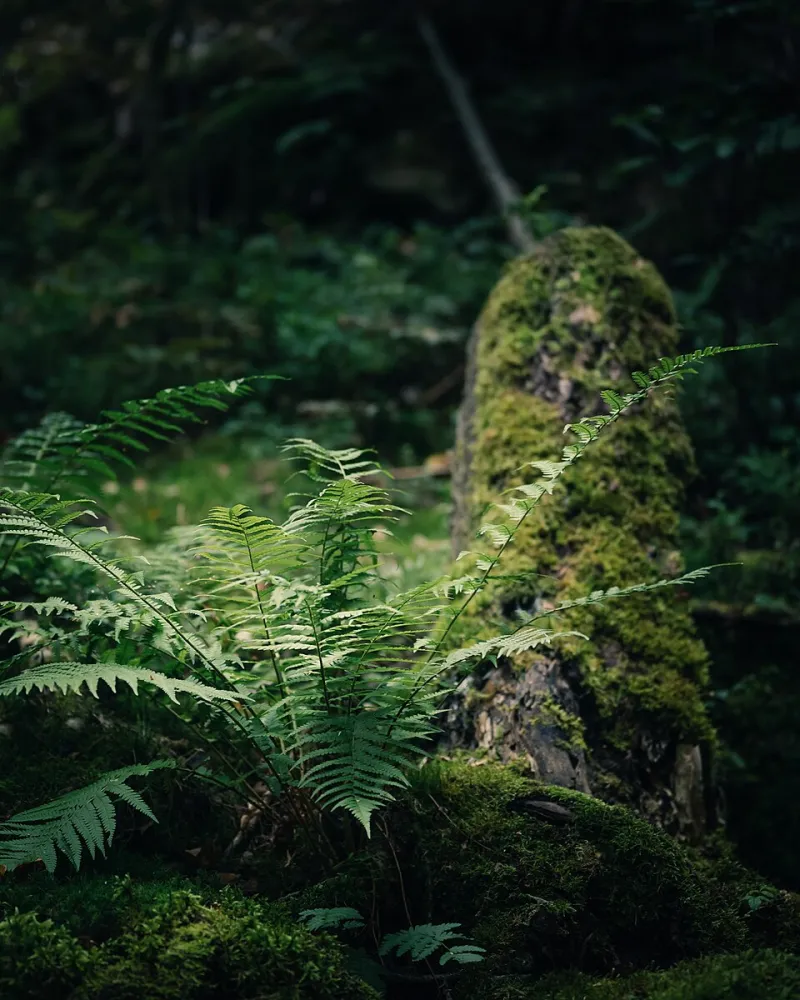
Photo: Ted Moravec, CC0, via Wikimedia Commons
American horror has a habit of raiding other cultures' nightmares. Japanese horror gave us a decade of wet-haired ghosts. Scandinavian folk terror delivered midsummer festivals that somehow became threatening. Now, if you pay attention to what's moving through development pipelines and showing up at genre festivals, the next frontier looks distinctly Central European.
Czech and broader Slavic folklore is having a moment in American horror — and honestly, it's about time. Because what's waiting in that tradition is weirder, darker, and more emotionally complex than most of what the genre has been working with lately.
Why Czech Folklore Hits Different
Before we get into specifics, it helps to understand what makes Czech mythology distinct — even within the broader category of Slavic folklore, which American audiences sometimes treat as a monolithic thing.
Czech legends developed at a particular crossroads: geographically central in Europe, historically contested, religiously complicated. The country experienced centuries of Habsburg rule, the trauma of forced re-Catholicization after the Thirty Years' War, and a national identity that was partly constructed through folklore during the 19th-century revival movement. This means Czech folk stories carry layers that most supernatural traditions don't — they're not just scary, they're politically and historically loaded in ways that give them unusual resonance.
The supernatural figures in Czech tradition also tend to operate by their own internal logic rather than following the familiar rules that Western horror has codified. They're not always evil in a straightforward sense. They're not always defeated by faith or courage or cleverness. Sometimes they just are — forces operating according to their own alien morality, which is genuinely unsettling in a way that monsters with clear weaknesses rarely manage.
The Figures You're About to Start Seeing Everywhere
A few specific figures from Czech and Bohemian folklore are already showing up in American genre content, and more are clearly on the way.
The Polednice — translated roughly as Lady Midday or the Noon Witch — is a spirit who appears to field workers at noon, engages them in conversation, and kills them if they can't keep talking until the church bell rings. She's been referenced in academic horror circles for years as an underutilized figure, and recent productions have started to engage with her. What makes her interesting for horror purposes is the mechanism: she doesn't attack, she converses. The horror is social, almost bureaucratic. You have to keep talking or you die.
Vodník — the water spirit, typically depicted as a green-skinned man who collects the souls of drowned people in cups — represents a distinctly Czech take on aquatic horror. Unlike many water spirits in other traditions, the Czech Vodník is fully integrated into village life. He has a wife, a house, complaints about his neighbors. He's domestic and horrifying simultaneously, which is a much more interesting combination than a straightforward monster.
Ježibaba — the Czech cognate of the more familiar Russian Baba Yaga — is a forest witch figure whose portrayal in Czech tradition has specific regional variations that distinguish her from her Eastern counterparts. American productions that have started engaging with Slavic witch figures often blend these traditions together, but the distinctly Czech versions have a rougher, more ambiguous quality that's worth preserving.
Then there's the broader tradition of Czech demon folklore, which doesn't map neatly onto Christian demonology even after centuries of religious overlay. Figures like the Rusalky (spirits of young women who died before marriage, not exactly ghosts but not quite alive) and the Divoženky (wild women of the forests) operate in moral gray zones that Western horror rarely explores.
What American Horror Is Actually Doing With This Material
The engagement is still relatively early-stage, which is part of why this piece exists — to give you the context before the wave fully breaks.
Recent years have seen a handful of American horror films and streaming series explicitly drawing on Slavic and specifically Czech source material, with varying degrees of fidelity and sophistication. The more interesting productions are the ones that don't just use Czech folklore as aesthetic wallpaper — creepy forests, old women in black, fog — but actually engage with the internal logic of the stories.
There's a meaningful difference between a horror film that looks like it's set in a Bohemian forest and one that actually operates according to the moral and narrative rules of Czech supernatural tradition. The latter is considerably scarier, because the rules are genuinely unfamiliar. You can't predict what will work against these entities, because the stories they come from weren't constructed to reassure audiences that good people survive.
Some of the most effective recent work in this space has come from Czech filmmakers themselves — horror productions that have screened at genre festivals and are starting to find American streaming audiences. These films have an authenticity that co-productions and American-made Czech-adjacent horror often lack, because the filmmakers understand the folklore not as exotic material but as something that comes from their own cultural soil.
The Gothic Architecture of Czech Storytelling
One thing that American horror writers and directors consistently cite when discussing their interest in Czech folklore is the structural quality of the stories. Czech folk tales, particularly those collected and somewhat sanitized by 19th-century folklorists like Karel Jaromír Erben, have a fatalistic architecture that feels genuinely modern.
Erben's collection Kytice (A Bouquet of Folk Songs) — which has been adapted for Czech film and theater multiple times — is a useful touchstone here. The stories in that collection aren't cautionary tales in the simple sense. Characters make understandable choices, sometimes even good choices, and are destroyed anyway. The supernatural forces in Erben's world don't punish wickedness — they punish disruption, which is a much more disturbing moral framework.
This is the quality that's drawing American horror creators to Czech source material right now. After years of trauma-based horror (the supernatural as metaphor for grief, addiction, abuse — all valuable, but becoming formulaic) there's appetite for horror that's simply inexplicable. Czech folklore delivers that in spades.
How to Get Ahead of the Curve
If you want to understand what American horror is about to do with Czech mythology — and be able to tell the good adaptations from the ones that just borrowed the aesthetics — the best preparation is engaging with Czech horror on its own terms first.
Several Czech horror and dark fantasy films are currently available on streaming platforms, and they represent the tradition in its most direct form. Czech fairy tale films, which occupy a genuinely strange middle ground between children's entertainment and adult horror, are particularly useful for understanding how the folklore actually functions narratively. These aren't sanitized Disney-style adaptations — they're films where the forest is genuinely threatening and the witch doesn't always lose.
The more you understand the source material, the better equipped you are to appreciate — or call out — what American productions do with it. Czech folklore has been waiting a long time for this kind of attention. The least it deserves is an audience that knows what it's looking at.