Behind the Camera: The Czech Creatives Quietly Transforming Hollywood
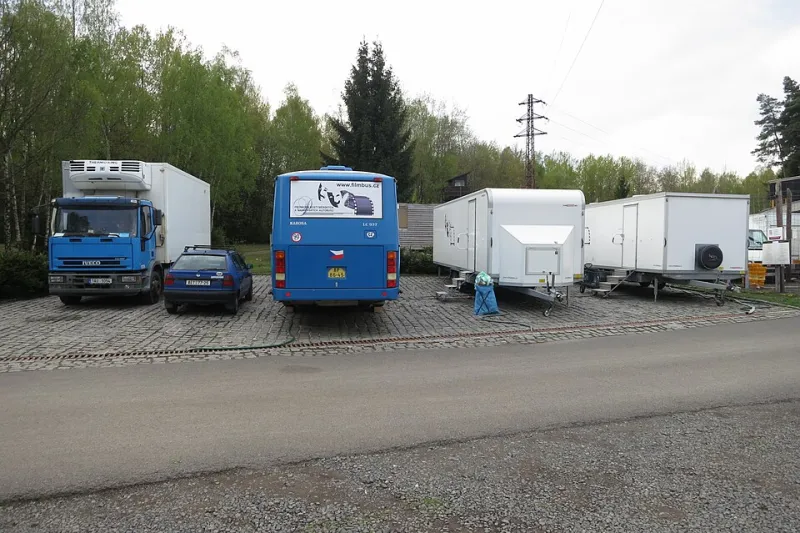
Photo: Jiří Sedláček, CC BY-SA 3.0, via Wikimedia Commons
The Quiet Revolution You've Been Watching
Here's a fun game: next time you're watching a visually stunning blockbuster or bingeing a prestige streaming series, stick around for the credits. You might be surprised how many Czech names scroll past. It's not a coincidence. Over the past decade or so, a steady stream of creative talent from the Czech Republic has been making its way into the heart of American filmmaking — and the results are impossible to ignore.
This isn't some niche story about foreign art films crossing the Atlantic. We're talking about major studio productions, Oscar-nominated cinematography, and production design work that defines the visual language of some of the most-watched content on Netflix, HBO, and the big multiplex screens. Czech talent has quietly become one of Hollywood's best-kept secrets — though it's getting harder to keep under wraps.
Why Czech? The Roots of a Visual Tradition
To understand why American studios keep coming back to Czech creatives, you have to go back a little. The Czech Republic has one of the most storied filmmaking traditions in the world. FAMU — the Film and TV School of the Academy of Performing Arts in Prague — has been cranking out world-class graduates since the late 1940s. It's the kind of institution that shaped the Czech New Wave movement of the 1960s, a period so influential that American directors like Miloš Forman (himself a Czech) went on to win multiple Academy Awards after immigrating to the US.
That institutional legacy matters. Czech film schools emphasize a rigorous, craft-first approach — deep training in visual storytelling, lighting theory, and production design that many American film programs simply don't replicate at the same level. When a Czech cinematographer walks onto a Hollywood set, they bring with them a tradition that stretches back generations.
"There's a discipline to the way we're trained," says one Czech-born cinematographer currently working on a major streaming thriller in Los Angeles. "We're taught to think about every frame as a painting. That doesn't go away just because you're shooting in California instead of Bohemia."
The Cinematographers Changing How America Looks at Film
Cinematography might be where Czech influence in Hollywood is most visible — at least to trained eyes. The Czech approach to lighting tends to favor naturalism with a painterly quality, drawing heavily from the country's rich tradition in visual arts. It's a style that feels fresh to American audiences even when they can't quite put their finger on why.
Several Czech-born directors of photography have become go-to collaborators for high-profile American directors. Their work has shown up in everything from intimate indie dramas to sprawling sci-fi epics. What unites them is an ability to use light and shadow in ways that feel emotionally precise — not just technically competent.
One Hollywood producer who has worked with multiple Czech cinematographers puts it plainly: "They see things differently. I don't mean that as a cliché. I mean their eye is trained on a different visual history, and it shows up on screen in ways that audiences respond to even if they don't consciously know why."
Production Design: Building Worlds With a Central European Soul
Beyond cinematography, Czech production designers have become increasingly sought after for their ability to build believable, textured worlds on screen. This is partly practical — the Czech Republic has long been a destination for international productions shooting in Europe, which means a deep pool of craftspeople, set builders, and art directors with serious experience on large-scale productions.
But it's also aesthetic. Czech design sensibility draws from a fascinating mix of Baroque architecture, Communist-era brutalism, Art Nouveau grandeur, and contemporary minimalism. That range gives Czech production designers a versatility that's hard to match. Whether a film needs a crumbling Gothic castle or a sleek near-future cityscape, there's likely a Czech designer who's already built something close to it.
Productions shot at Barrandov Studios in Prague — one of the largest film studios in Europe — have included everything from major Marvel productions to prestige HBO series. The facility and the talent surrounding it have made the Czech capital a genuine second home for American productions looking to stretch their budgets without sacrificing quality.
Directors Making Their Mark
While cinematographers and designers may be the most visible Czech contributors to Hollywood, directors are increasingly part of the conversation too. The pipeline from Czech film school to American streaming platform has become a well-worn path, with several Czech-born directors landing significant projects with major studios and platforms.
The appeal for studios is partly about fresh perspective. In an era when audiences are increasingly fatigued by formulaic storytelling, Czech directors tend to bring a more elliptical, character-driven approach — one rooted in the literary and theatrical traditions of Central Europe. That can be a tough sell in pitch meetings, but when it connects, it really connects.
"American studios are hungry for something that doesn't feel like everything else," notes one Czech director who recently completed a limited series for a major streaming platform. "And I think Czech storytelling — with its humor, its darkness, its refusal to tie things up neatly — offers exactly that."
What This Means for American Audiences
For viewers in the US, the growing Czech influence on Hollywood is mostly a good thing. It means more visual ambition, more craft, and more storytelling approaches that don't fit neatly into the standard Hollywood template. It means films and series that look different, feel different, and linger longer after the credits roll.
At CzechVideo, we've been watching this trend with a lot of pride and a fair amount of excitement. The Czech creative tradition is deep and rich, and seeing it filter into mainstream American entertainment feels like a long-overdue acknowledgment of just how much this small Central European country has contributed to world cinema.
Next time something on your screen stops you cold with a shot so beautiful you want to pause and just stare at it — check the credits. There's a decent chance someone from Prague had something to do with it.